

I didn’t realize until recently that fiction had been the most stable home I’ve ever had.
The realization came yesterday, while listening to an AI narration of Harry Potter and the Goblet of Fire in a calm, aristocratic British voice (I know, right?). An hour passed without effort. I wasn’t multitasking. I wasn’t trying to extract lessons. I was simply transported. With that transport came a warmth that felt familiar, almost physical. Childhood returned as continuity.
That was when it struck me: whenever life had been discontinuous, fiction had stepped in to provide structure.
I grew up moving constantly. My dad’s job required frequent transfers, and by the time I reached undergrad, I had attended eight different schools. Each move meant starting over. New classrooms. New faces. New rules of belonging. Friendships were always temporary, however intense they felt in the moment. I learned early that external continuity was unreliable.
Fiction filled that gap.
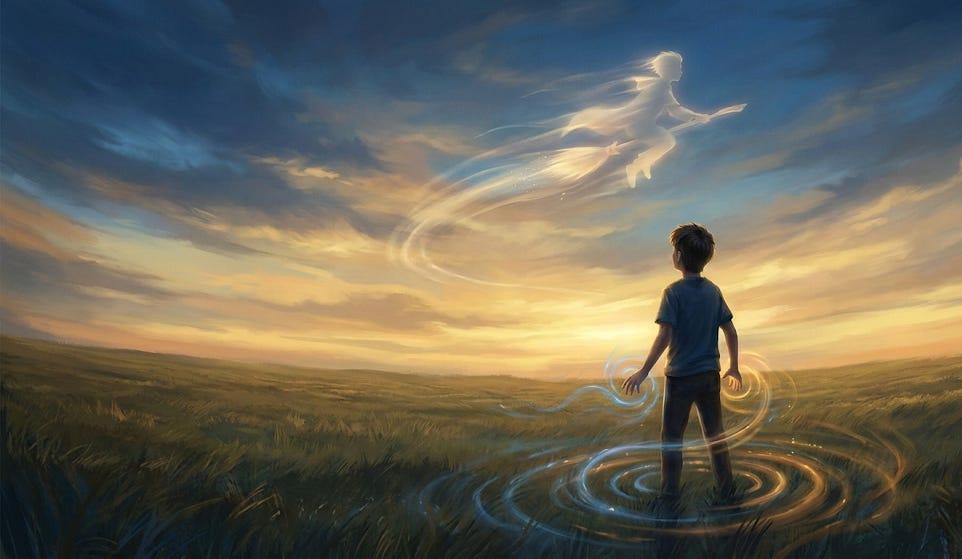
Harry Potter was the first world that stayed put while everything else moved. I encountered it first through films, then through PC games, and eventually through the books themselves. What mattered most was the timing of seeing Harry grow up, as he was growing up just as I was. His fears matured as mine did. His world expanded just as mine kept resetting. I didn’t merely read those books. I inhabited them. They gave me a sense of narrative continuity when real life refused to. This is something many 90s kids can relate to, as Harry Potter became the shared narrative we all lived through.
I wasn’t alone in this. My elder brother and cousin sister were already deep into reading. They served as informal conduits of stories for me before I could access the books myself. At night, my brother would narrate entire sections of parts five and six. Those narrations were intimate, almost ritualistic. Listening to stories in the dark, letting imagination do the heavy lifting, trained something fundamental in me long before I knew what it was.
When the seventh book finally came out, the hunger for it was overwhelming. My brother managed to get a copy from a friend. He read it in two days, then handed it to me. I took weeks to savor it slowly. Around that time, an aunt who lived below our apartment asked me casually why one should read such a series at all. I remember freezing. I didn’t have an answer ready. It was the first time I realized that something central to my inner life might be completely invisible to others. That realization was dizzying.
Soon after ninth grade, I was introduced to Naruto. The seriousness of its writing surprised me. This wasn’t casual entertainment that people generally associate anime with. It was disciplined storytelling, moral struggle, loyalty, loss, and perseverance rendered with care. My brother would send CDs by post, and I would wait with anticipation for them. Those stories stayed with me through my late teens, quietly shaping my sense of effort and endurance.
The first year of my undergrad marked another shift. That was when I discovered Stieg Larsson’s three-part series, The Girl with the Dragon Tattoo. That was a revelation for me, not just because of the story, but because of how it completely seized my attention. I remember reading those books with almost bated breath.
I read them everywhere. While walking to class. While coming back from lectures. Sitting behind the classroom, the book was hidden just enough to escape notice. Walking through the dorm corridors. During vacations, whenever I could find a quiet corner to sit, think, and continue. Every space became a place to read. Time itself began to organize around the act of reading.
I was deeply drawn to Lisbeth Salander. The character stayed with me in a way few others had. There was something uncompromising about her presence and about the world she inhabited. The writing was sharp, precise, and relentless. It did not offer comfort or easy resolutions. It demanded attention and rewarded it with intensity.
What struck me most was the quality of the writing itself. It trusted the reader. It stayed with difficult material without diluting it. There was a seriousness to it that I had not encountered before, and it changed the way I related to fiction. Reading was no longer just a refuge. It became absorption. A state in which the outside world receded and something sharper, more demanding took its place.
By the time I finished the trilogy, something in me had shifted quietly. I found myself less interested in stories that were merely soothing. I wanted narratives that could hold complexity, darkness, and intelligence together without flinching.
By the second year of undergrad, fiction became immersive rather than episodic. A friend lent me his Kindle, and I downloaded all the volumes of Game of Thrones. I read obsessively. Day and night. The world was brutal, intricate, and morally ambiguous. It demanded attention. This was no longer a refuge in the sense of a place of shelter. It was a refuge through complexity. The real world was pressing in with questions about career, competence, and future. Fiction offered a place where I could engage with difficulty on my own terms.
Then something interesting happened. Fiction changed form.
In my later undergrad years and through grad school, I drifted away from novels almost entirely. Instead, I took refuge in research papers. Computer vision. Machine learning. Mathematical abstractions. To an outsider, this might look like a departure from imagination. To me, it felt like continuity. Papers were worlds. Models were characters. Assumptions were the laws of physics. Elegant solutions delivered the same quiet satisfaction that a well-resolved chapter once had.
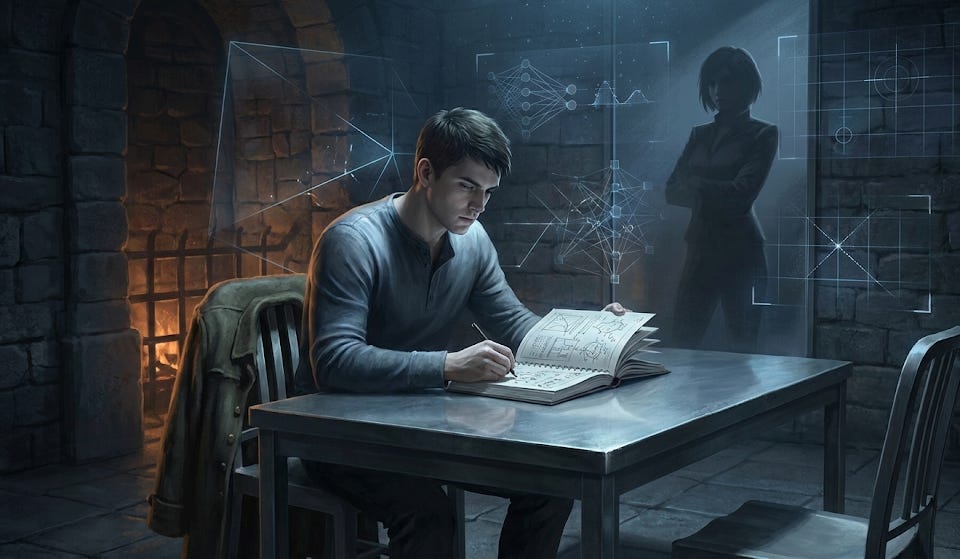
After moving to New York in 2017, fresh out of grad school, that world collapsed too. Professional life began in earnest, and with it came a strange hollowness. The fictional universes I had relied on for years no longer seemed accessible. I remember feeling disturbed, as though something essential had gone missing.
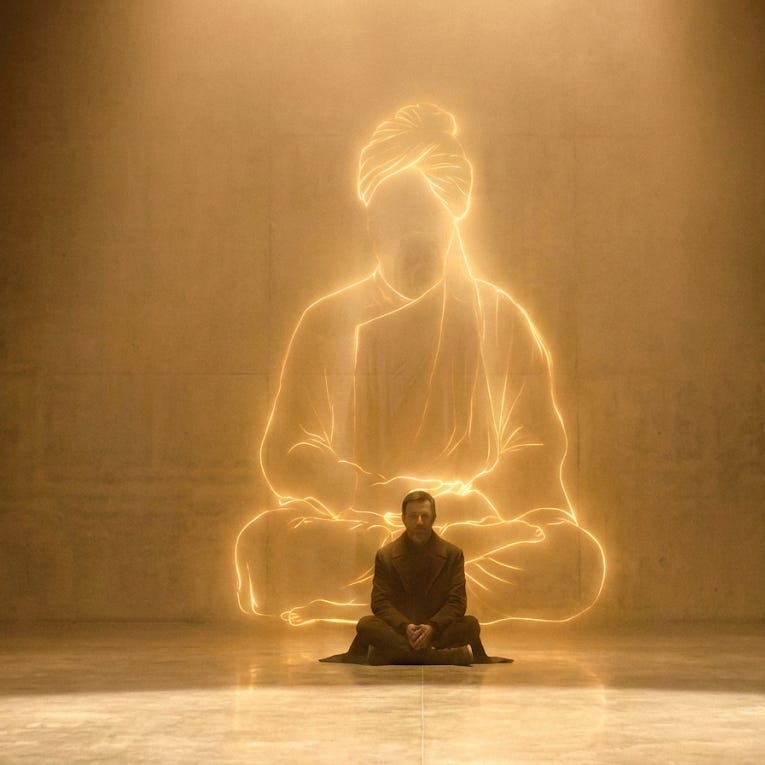
That was when I encountered the world of Swami Vivekananda and Sri Ramakrishna, largely through the extempore lectures on Advaita Vedanta by Swami Sarvapriyananda at the Vedanta Society of New York. I did not approach this as a belief or conversion. I approached it the way I had always approached new worlds: with curiosity and seriousness. Vedanta unfolded like a living universe. Concepts replaced characters. Inquiry replaced plot. Thought itself became inhabitable.
Looking back, I see that each phase of my life demanded a different kind of fiction. Childhood needed shelter. Adolescence needed intensity. Early adulthood needed immersion. Intellectual years needed abstraction. Migration demanded a philosophical world spacious enough to hold uncertainty without panic.
This is why I no longer find the distinction between fiction and non-fiction particularly meaningful. Psychologically potent fiction does not oppose truth rather it prepares one to receive it.
The Mahabharata contains the Gita. Is it fiction or non-fiction?
The question itself dissolves on inspection. Fiction is the sweetness through which highly metaphorical knowledge systems can be passed down through generations without any dilution. It taps into the power of stories to completely rewire one’s internal experience of life. It makes truth livable and maybe even relishable.
In a world where reading has become fragmented and attention scarce, I find myself returning to listening. AI narrations. Audiobooks. Lectures. Voices that carry these fictional worlds into my daily movement. It still works. Perhaps it always will. It still has the power to suck in the poison that the daily life in its course inevitably generates.
When I honestly trace my life, I do not see these fictional-episodes as a series of escapes. Rather I see them as training grounds where each imagined world prepared me for a reality I had not yet reached. Each refuge quietly expanded my capacity to endure change.
And that, more than anything, makes me grateful.
What a fabulous life this is.